
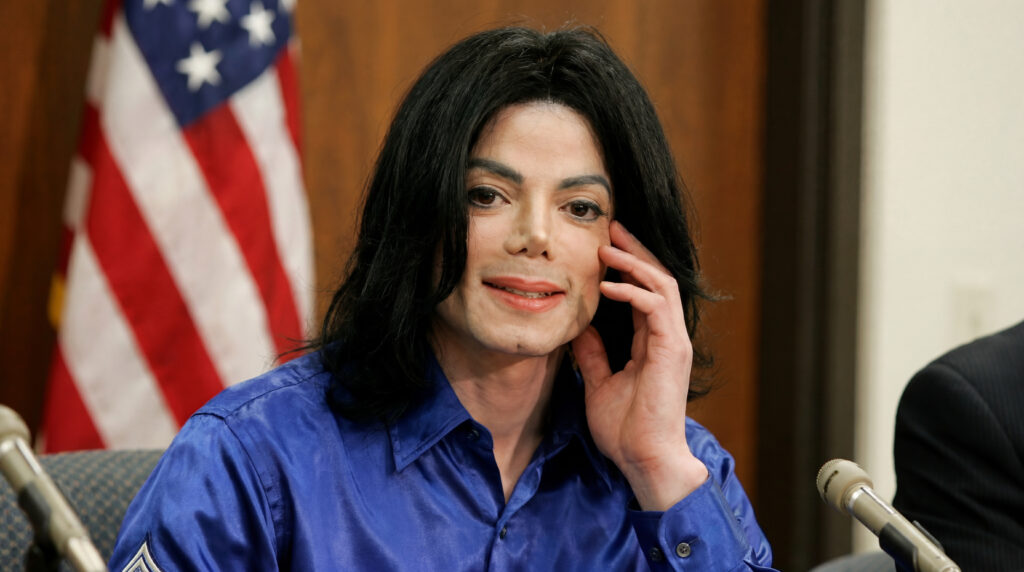
 Michael Jackson: His Full Life Story, Health Struggles, and Death
Michael Jackson, crowned the “King of Pop,” is one of the most influential and most misunderstood entertainers who ever lived. He sold hundreds of millions of records, redefined what a live performance could be, and turned the music video into an art form. Yet behind the global fame was a man who battled a painful skin disease, relentless tabloid scrutiny, and personal struggles that followed him to an early grave. This is the complete story of his life — from a small house in Indiana to a worldwide mourning that few public figures have ever inspired.
Childhood in Gary, Indiana
Michael Joseph Jackson was born on August 29, 1958, in Gary, Indiana, the eighth of ten children in a working-class family. His parents, Katherine and Joseph Jackson, were devout Jehovah’s Witnesses with a strong love of music. Money was tight, the household was strict, and from a very young age the Jackson children were pushed hard toward musical discipline. Michael, in particular, revealed an astonishing natural talent — a voice and a sense of rhythm that set him apart even among his gifted brothers.
Joseph Jackson recognized that talent early and drove his sons relentlessly. The rehearsals were demanding and the discipline harsh, and Michael would later speak about a childhood largely lost to work and performance. That tension — extraordinary gifts shaped under enormous pressure — would echo through the rest of his life.
The Jackson 5 and Early Fame
As the youngest member and the natural lead vocalist, Michael fronted the Jackson 5 alongside his brothers Jackie, Tito, Jermaine, and Marlon. Signed to the legendary Motown Records, the group became an instant sensation, launching a run of number-one hits including “ABC,” “The Love You Save,” and “I’ll Be There.” Audiences were stunned that a child could sing with such emotional depth and command a stage with such confidence.
The Jackson 5 toured constantly and even inspired their own animated television series. By the early 1970s, Michael was already a star — but his greatest achievements were still ahead of him, as he began to imagine a solo career on his own terms.
Going Solo: Off the Wall and the Birth of a Legend
Michael Jackson’s solo breakthrough arrived with the 1979 album Off the Wall, produced with the brilliant Quincy Jones. Blending pop, funk, soul, and disco, it announced him as a mature artist with a sound entirely his own. Hits like “Don’t Stop ’Til You Get Enough” showed a performer who had grown far beyond his Jackson 5 roots and was ready to dominate popular music.
Thriller: The Album That Changed Everything
In 1982, Michael Jackson released Thriller, and the music world was never the same. Mixing pop, rock, funk, and R&B, the album spent a record 37 non-consecutive weeks at number one on the Billboard chart and produced seven top-ten singles — a record at the time — including “Billie Jean,” “Beat It,” and the title track. With estimated global sales of around 70 million copies, Thriller remains the best-selling album of all time.
The album’s impact went far beyond sales. Its short films transformed the music video into serious, cinematic storytelling, and its success helped break down racial barriers on MTV. Thriller made Michael Jackson the biggest star on the planet and set a new standard that every artist who followed would be measured against.
The Moonwalk and a Revolution in Performance
If one moment turned Michael Jackson into a worldwide phenomenon, it was the night he debuted the moonwalk. During the 1983 television special Motown 25, he performed “Billie Jean” solo and glided backward across the stage in a move that seemed to defy physics. An estimated 47 million viewers watched, and the dance instantly became his signature. Hollywood dance legend Fred Astaire reportedly telephoned afterward simply to praise his movement.
From that point on, Jackson’s performances became global events. He followed Thriller with Bad (1987) and Dangerous (1991), delivering enduring hits such as “Smooth Criminal,” “Black or White,” and “Man in the Mirror,” and cementing a style of music, dance, and showmanship that defined a generation.
He didn’t just make records — he turned every release into a worldwide event.
His Health: Vitiligo and Lupus Explained
One of the most misunderstood parts of Michael Jackson’s life was the dramatic change in his appearance. For years, tabloids and critics accused him of deliberately bleaching his skin. The truth, confirmed by his doctors and later by his autopsy, was a genuine medical condition.
According to his dermatologist Dr. Arnold Klein and the biography by J. Randy Taraborrelli, Jackson was diagnosed in 1986 with vitiligo — a chronic autoimmune disorder in which the skin loses its pigment in patches — as well as lupus, another autoimmune condition that can affect the skin. The vitiligo gradually lightened large areas of his skin, while the lupus left him sensitive to sunlight. The hands and face, which are especially hard to treat, were among the most affected areas.
To cope with the uneven, spreading patches, Jackson used makeup and medically approved creams to even out his complexion, which over time gave his skin a much paler appearance. He spoke openly about the condition in his famous 1993 interview with Oprah Winfrey, insisting that he had not bleached his skin and that vitiligo was the real cause. His 2009 autopsy confirmed the diagnosis, documenting depigmentation across several areas of his body — finally vindicating what he had said years earlier. In his honor, World Vitiligo Day is now observed on June 25, and his story has greatly raised public awareness of the condition.
Controversies and Personal Struggles
Fame on Michael Jackson’s scale came with intense and often cruel scrutiny. His changing appearance, his private life at his Neverland Ranch, and his eccentric public image made him a constant target for the press. More seriously, he faced allegations of child molestation that cast a heavy shadow over his reputation and remain part of the complex, widely debated conversation about his legacy.
There was also lasting physical pain. During the filming of a Pepsi commercial in 1984, his hair caught fire and he suffered serious burns to his scalp — an injury that led to years of pain and reliance on medication. Combined with the stress of lifelong fame and his health conditions, these struggles took a steady toll on his wellbeing.
The Death of the King of Pop
Michael Jackson died on June 25, 2009, at his home in Los Angeles, at the age of 50, just as he was preparing for an ambitious comeback concert series in London. The official cause of death was acute intoxication from the anesthetic propofol combined with sedatives, which led to cardiac arrest. His personal physician, Dr. Conrad Murray, was later convicted of involuntary manslaughter for administering the drugs.
His sudden death triggered a wave of grief unlike almost any in modern history. Fans gathered around the world for vigils and tribute concerts, his music surged back to the top of the charts, and a public memorial drew an enormous global audience. The world was reminded, all at once, of just how deeply his music had touched people across cultures and generations.
His Enduring Legacy
Michael Jackson’s influence reaches far beyond record sales and awards. A 13-time Grammy winner, he established the template for modern pop stardom — a complete fusion of music, dance, and visual storytelling that artists still follow today. His recordings, choreography, and style remain reference points across pop, hip-hop, R&B, and electronic music, and his songs continue to find new audiences decade after decade.
Talented, visionary, and endlessly debated, Michael Jackson lived a life of dazzling achievement and genuine suffering. He gave the world some of its most beloved music while quietly battling illness and the weight of unimaginable fame. Long after his death, the King of Pop’s voice, his moves, and his story continue to move audiences everywhere — which is exactly why his legend endures.