
Few actors have ever shaken Hollywood the way Marlon Brando did. The mumbled lines. The raw, dangerous intensity. The sense that anything could happen on screen. Indeed, he didn’t just play characters — he became them. As a result, he changed film acting forever and inspired generations who followed. Yet behind the genius lay a life marked by triumph, rebellion, and deep personal tragedy.
So let’s revisit the troubled legend who gave us Stanley Kowalski and Don Vito Corleone.
Marlon Brando: Quick Facts
Marlon Brando was born on April 3, 1924, in Omaha, Nebraska, and died on July 1, 2004, in Los Angeles, California. He was an American motion picture and stage actor known for his visceral, brooding characterizations. Above all, he is remembered as one of the greatest screen actors who ever lived. In fact, he performed for more than 50 years. Encyclopedia Britannica + 2
The Actor Who Broke the Rules
Before Brando, screen acting often felt polished and theatrical. However, he tore up that rulebook. Specifically, he transformed Hollywood with his innovative practice of method acting, inspiring the likes of James Dean and Robert De Niro. Indeed, his mumbling, slurred voice signaled his rejection of traditional dramatic acting, and his performances made him one of the greatest actors of his generation. New World EncyclopediaNFI
His breakthrough remains iconic. For example, his portrayal of Stanley Kowalski in the 1951 film A Streetcar Named Desire redefined acting standards, introducing a revolutionary level of raw intensity and realism. NFI
The Rise of a Star
After Streetcar, Brando dominated the decade. Remarkably, he was nominated for Best Actor four straight years: A Streetcar Named Desire (1951), Viva Zapata! (1952), Julius Caesar (1953), and On the Waterfront (1954). New World Encyclopedia
Then came his first major win. Notably, his sensitive portrayal of a union muscleman who testifies against his gangster boss in On the Waterfront (1954) won him the Best Actor Oscar and firmly established him as one of Hollywood’s most-admired actors. Encyclopedia Britannica
A Long Decline
Success, however, did not last. In the 1960s, his career went into a long period of decline. Partly, his reputation as a difficult star and a long string of commercial failures took a toll on his box-office appeal. During this time, he also starred in the only film he ever directed, the western One-Eyed Jacks (1961), which became notorious for his excessive spending of time and money. Encyclopedia Britannica + 2
The Godfather: A Stunning Comeback
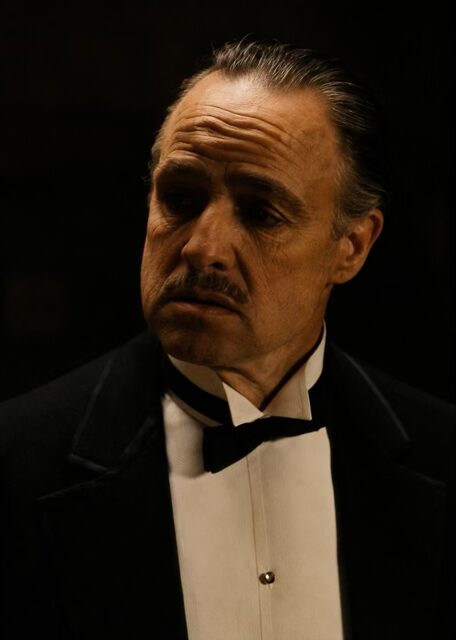
Then, in 1972, everything changed. Famously, Francis Ford Coppola’s The Godfather rejuvenated Brando’s career. As organized-crime boss Don Vito Corleone, Brando created one of the most memorable — and most imitated — film characters of all time. Encyclopedia BritannicaEncyclopedia Britannica
Behind the scenes, though, the production was chaotic. For instance, he was criticized for his on-set tantrums and for trying to alter the script. Despite this, the result was magic. Ultimately, his performance earned him another Best Actor Oscar. BiographyEncyclopedia Britannica
The Oscar He Refused
That second Oscar became legendary for a shocking reason. Indeed, Brando refused the award in protest against the stereotypical portrayals of Native Americans throughout motion picture history. Instead, he sent a Native American activist named Sacheen Littlefeather to decline the award on his behalf. As a result, the moment became one of the most unforgettable protests in Oscar history. Encyclopedia BritannicaBiography
Later Roles and Lasting Fame
Even in semi-retirement, Brando still commanded the screen. For example, he took noted supporting roles in Superman (1978) and Apocalypse Now (1979). Yet, as his career declined, his demands to appear and his bizarre behavior often made more headlines than his performances. Notably, he demanded a large sum of money for a very small part as Jor-El in the first Superman movie. Encyclopedia Britannica + 2
A Life Touched by Tragedy
Sadly, Brando’s private life was filled with pain. In particular, he experienced personal tragedies including his son Christian’s conviction for manslaughter and the suicide of his daughter Cheyenne in 1995. Moreover, his later years were marked by declining health, obesity, and financial troubles, despite his continued acting work. LiveAboutMovie Star History
The Final Years
Eventually, the curtain fell on a remarkable life. Brando died on July 1, 2004, at the age of 80, in Los Angeles. The cause was reported as respiratory failure from pulmonary fibrosis, with complications from congestive heart failure. Fittingly for a restless soul, his ashes were later scattered in Tahiti and Death Valley, places he deeply loved. Movie Star HistoryMovie Star History
A Legacy That Will Never Fade
So why does Brando still matter? Simply put, he reinvented what acting could be. Indeed, he won two Best Actor Oscars and earned eight total nominations, and he is regularly cited by critics and other actors as one of the greatest actors and biggest stars in Hollywood history. LiveAbout
Ultimately, Marlon Brando was a troubled genius who forever altered the craft of film acting. He was brilliant, rebellious, and deeply human. Therefore, more than twenty years after his death, his shadow still falls across every actor who dares to be real on screen.
If you enjoyed this article, don’t stop here — discover the dark secrets behind his greatest film: read the story of The Godfather here.